Bromley House Clearance in Bromley
We provide Bromley house clearance for homes that need rooms emptied in a careful, orderly way, with a focus on sorting, lifting and removing household contents. The service can support moves, estate clearances, property changes and the removal of unwanted items from one room or from an entire property. For many customers, the main benefit is a straightforward way to deal with bulky furniture, mixed household waste and accumulated belongings without having to organise each part separately.
Our work covers practical clearance tasks rather than one fixed type of visit. That can include clearing furniture, bagged items, general household contents and items that have built up over time. We can also handle clearances where access matters, such as upper floors, tight stairways or properties with rooms packed more densely than expected. The aim is to leave the space ready for its next use while keeping the process as orderly as possible.
If you are arranging a clearance and want to compare the work involved, you can start with a simple enquiry and outline the rooms or items involved. For a fuller breakdown of what we handle, the house clearance page explains the wider service. If you already know you need a quotation, the best next step is to request one using the contact details on this website.
House clearance work for occupied and empty properties
House clearance often begins with deciding what should stay, what should be moved elsewhere and what can be removed in one visit. That applies whether the property is still occupied, partly cleared after a move or awaiting sale or let. We can work through rooms systematically so that furniture, loose items and mixed contents are handled in an organised order. This approach helps when the job involves several rooms rather than a single bulky item.
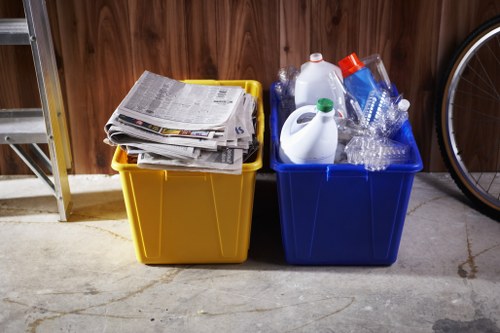
In many homes, the most useful part of the service is simply having a team that can manage the heavier parts of the work. Wardrobes, sofas, tables, beds and other household items can all require different lifting, carrying and loading decisions. Where useful, we can also group similar items together so that reusable furniture, recyclable materials and general waste are kept separate. That sort of sorting can make the overall clearance more efficient and easier to manage from the customer side.
What a typical house clearance may include
A typical job may include a mix of items rather than a single category. To make the scope clearer, the work can involve:
- removing furniture from bedrooms, living rooms or dining rooms
- clearing bagged household contents and general clutter
- lifting bulky items that are awkward to move without help
- separating reusable pieces from mixed waste where appropriate
- clearing items from lofts, garages or spare rooms as part of the same visit
Furniture clearance and disposal for bulky household items

Furniture clearance is often the most practical part of a house clearance, because individual pieces can be difficult to shift safely without suitable transport and lifting. We can remove single items or full room contents, depending on what needs to go. Sofas, armchairs, wardrobes, beds, bookcases, tables and similar items can all be handled as part of a wider clearance or as a separate booking if that is all you need.
Where disposal is needed, the work is not just about removal from the property. It also involves deciding how each item can be dealt with once it leaves the home. Some items may be suitable for reuse or reuse channels, while others are best treated as mixed waste or broken furniture. We aim to keep that process orderly and practical, and we can discuss the kind of furniture involved so the clearance plan matches the job.
For customers comparing service types, the furniture clearance page gives a focused view of that work, while the furniture disposal page is useful if the main requirement is to remove old or unwanted furniture items only. If the job is part of a wider domestic clearance, you can still ask for a quotation and describe the items that need attention.
Rooms, access and the practical side of clearing a property
One of the main differences between clearances is the layout of the property itself. A clearance from a flat, maisonette or terraced house can involve different access points, stair widths and item handling arrangements. That is why it helps to think about the property as well as the contents. A job may involve moving pieces from an attic room, taking items from a basement, or clearing a home where access needs to be kept tidy during removal.
We can also handle clearances where the useful work includes more than one room type. A loft may contain boxes, seasonal items and old furniture. A garage may hold broken tools, household storage and miscellaneous items. A spare room can contain a mixture of clothes, books, small appliances and old furniture. Each of these needs a different sort of sorting and lifting, so it is sensible to group them into one clear plan rather than treat them all the same.
When access affects the work
Access does not need to be a problem, but it does shape the way the job is organised. Tight corners, narrow hallways and upper-floor rooms can make item removal more involved, while large pieces may need to be dismantled or moved in stages. That is one reason why a clear description of the property is useful when requesting a quotation. If the home contains awkward items or several levels, it helps to mention that from the outset so the work can be planned properly.
Loft, garage and specialist household clearance areas
Some of the most common clearance requests involve parts of a property that have been used for storage over time. A loft may contain boxes, furniture, decorations, papers and mixed household items. A garage often becomes a general storage space for tools, sporting equipment, old furniture and items that are no longer needed indoors. These spaces can be awkward because contents are often packed around each other rather than arranged neatly, which makes sorting more important.
In these areas, the job is usually less about a single type of waste and more about untangling a mixture of objects. We can clear useful items, broken items and general clutter as part of the same visit, keeping the work practical and manageable. The more clearly the contents are described, the easier it is to decide whether the job should be treated as a partial clearance, a room-by-room clearance or part of a larger whole-property service.
For customers wanting specific room clearances, the loft clearance and garage clearance pages explain those services in more detail. If the contents are spread across several parts of the property, it may be more straightforward to arrange a wider visit that deals with everything together. Either way, the aim is to make the removal process clear and organised.
Waste removal for mixed domestic items and bulky loads
House clearance work can overlap with general waste removal when the property contains a varied load rather than a neat list of items. In practice, this can mean mixed household contents, damaged furniture, bagged waste, old storage items and other objects that no longer have a place in the home. We can remove these as part of a domestic clearance plan so that the work is handled in one clear sequence rather than split into several small visits.
Some customers want a clearance because a property has gradually filled with items that are no longer needed. Others are dealing with a home after a move, a refurbishment or a change in occupancy. In those cases, it is useful to think about the work in stages: what is staying, what needs to be moved elsewhere and what should go. A considered approach helps keep the clearance efficient and reduces confusion on the day.
For broader disposal needs, the waste removal page is a helpful place to see how mixed loads can be managed. If part of the job involves rubble, offcuts or other materials linked to property work, the builders waste clearance page explains that separate service. We only use those pages where they match the kind of load being removed, which keeps the service choice straightforward.
Planning your clearance and requesting a quotation
When you are ready to arrange a clearance, the most useful information is usually the scope of the job. A short description of the rooms involved, the type of items present and whether anything is especially bulky can make the quotation process much easier. It also helps to mention whether the property is occupied, empty or only partly cleared, because that affects how the work is organised and what level of access is available.
If possible, gather the details that make the job easier to understand. That may include how many rooms are involved, whether there are stairs or difficult access points and whether you need just furniture removed or a fuller contents clearance. Clear information leads to a more accurate quote, especially when the job includes several item types or more than one floor. You do not need to over-prepare; a straightforward description is usually enough to begin with.
Please send an enquiry with the relevant details and ask for a quotation when you are ready. If you want to compare other clearance pages before contacting us, the office clearance page is useful for business-related clearances, while the flat clearance page covers smaller domestic properties. For pricing-related guidance on this site, you can also review the pricing and quotes page.
Pricing factors and how different clearances are assessed
Quotation details usually depend on the size of the job, the type of items involved and how much labour is needed to remove them safely. A single furniture item can be very different from a full property clearance, even if both are booked under the wider house clearance heading. Mixed contents, heavier pieces and awkward access can all affect the time and effort involved, so it helps to explain the job in practical terms rather than just giving a general description.
It is also useful to think about whether items are concentrated in one room or spread across several areas. Clearances that involve lofts, garages, bedrooms and living spaces tend to need more planning than a simple one-room job. The condition of the property matters too, especially if items are stacked tightly or need careful movement through narrow routes. We keep the approach sensible and focused on the actual work required.
Our home clearance page covers whole-home clearances, and the about us page gives more general background on the business. If you prefer to check terms or payment details before sending an enquiry, the payment and security page and the terms and conditions page are available on the site.
About Bromley
Bromley is a large town in southeast London with roots as a historic market settlement and later suburban growth linked to rail travel and metropolitan expansion. Its town centre combines older street patterns with later retail and civic development, while the wider borough includes a varied mix of residential districts, parks and local centres. The area sits within Greater London but retains a recognisable town identity shaped by both long-established local services and continuing change in housing and transport. recycling and sustainability
The town’s built environment reflects that layered history. Bromley contains streets of Victorian and Edwardian housing, post-war development and more recent commercial buildings, alongside civic landmarks such as the Churchill Theatre and the Bromley Central Library. Church architecture, shopping streets and the civic core give the centre a settled urban character, while the wider borough reaches into green spaces and suburban neighbourhoods. This contrast between town centre, residential districts and parkland is one of the features that defines the area.
Green space is a major part of Bromley’s identity. Nearby parks and open landscapes, including Bromley’s links to larger borough green corridors, contribute to a setting that feels more spacious than much of inner London. The borough also includes historic villages, commons and wooded areas, with transport routes connecting those places back to the town centre. That combination of suburban growth, civic facilities and access to open land gives Bromley a varied local character that has developed over many decades.
House clearance support for different property situations

House clearance requests are often linked to a change in property use, but the practical work can vary a great deal from one job to another. Some clearances involve a single room that has become cluttered. Others involve furniture and contents from a whole house after a move or renovation. We can adapt the service to the scale of the work, whether that means clearing a few bulky items or removing a larger mix of household contents.
There are also times when the most useful service is one that combines different parts of the property in a single plan. A kitchen may hold old appliances and general waste, a bedroom may contain furniture and bags of belongings, and a loft may contain boxes and stored items. Handling those areas together keeps the project coherent. It also reduces the need for customers to divide the work into separate jobs unless that is genuinely the better option.
If the clearance is linked to another type of property project, it can help to mention that when you enquire. For example, a business waste removal booking may be more suitable for non-domestic loads, while the garden clearance page is the better fit for outdoor waste and green material. Matching the service to the right page makes it easier to set expectations clearly.
Keeping the clearance organised from start to finish
A good clearance is usually the result of sensible organisation rather than complicated promises. That means knowing what is being removed, how the items are distributed through the property and whether anything needs special handling. It may also involve separating furniture from general waste or identifying items that should be left in place. When this is done properly, the work stays clearer for everyone involved.
There are a few practical details that can help the process without turning it into a long checklist. Make sure the key rooms are accessible, keep hold of anything you do not want removed and explain any items that are especially heavy, fragile or awkward. Those points are enough for a solid starting discussion. From there, the quotation can reflect the real scope of the job rather than a vague description that leaves too much open to interpretation.
To finish, if you need Bromley house clearance for one room, several rooms or an entire property, please ask for a quotation and describe the items you want cleared. You can also review the contact us page to send your enquiry. We will then be able to discuss the right approach for your clearance and help you move forward with confidence.